

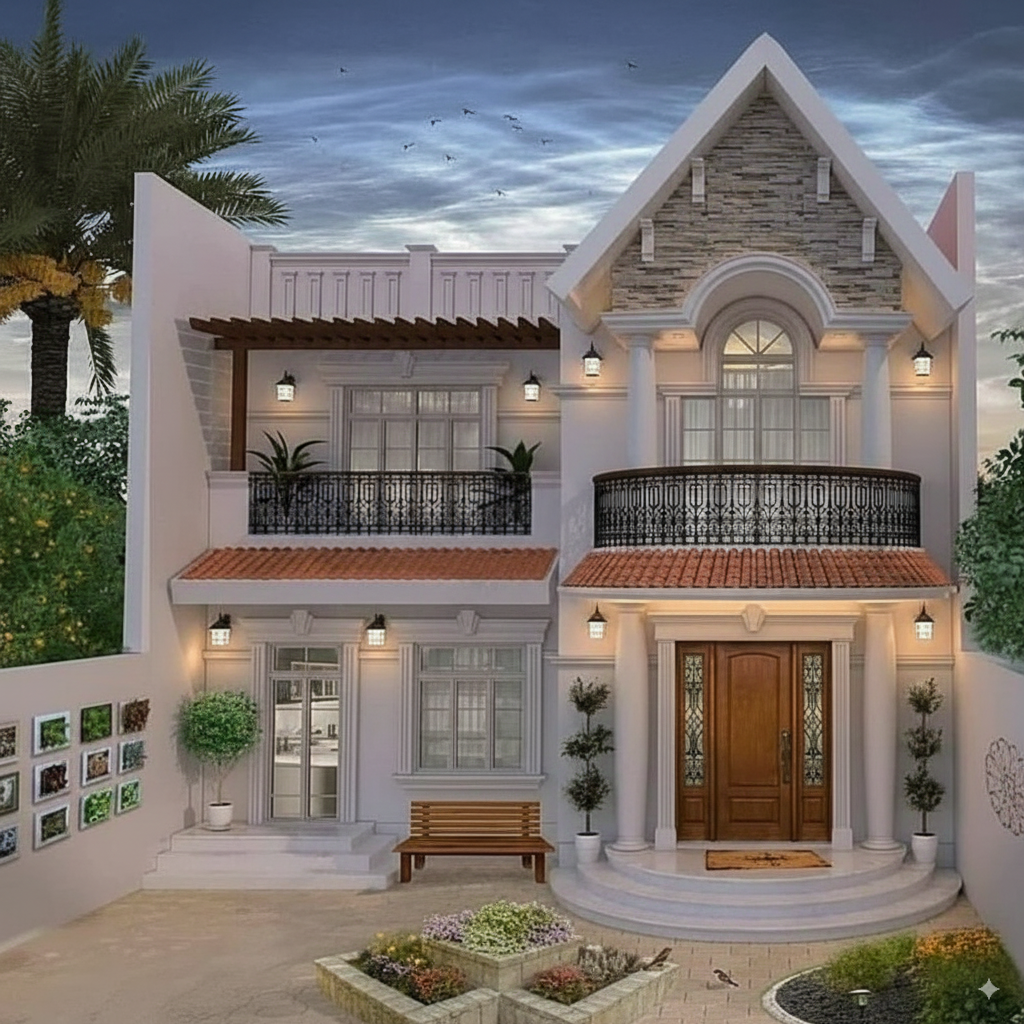
Neo-Classic Villa Magic: Curved Balcony, Terracotta Roof — 17 Curb-Appeal Secrets You Can Steal Today
I paused the moment I saw this façade. The house wasn’t shouting; it was conducting—terracotta rooflines keeping time, a curved balcony holding the melody, round entry steps like a drumroll to the wooden door. This is the quiet confidence of neo-classic design: familiar proportions, human-scale details, and a glow that grows warmer as dusk arrives.
If your goal is to make the front of your home feel welcoming, photogenic, and valuable—without a palace budget—this guide decodes the villa above into 17 specific moves you can copy today. We’ll talk shape, color, lighting, ironwork, landscaping, and the small choices that create big emotion. You’ll also find realistic, budget-friendly alternatives and a weekend checklist to help you start now.
Why This Look Works
Neo-classic design borrows the bones of tradition—symmetry, columns, and archways—then updates them with modern comfort. The terracotta roof warms the palette, the curved wrought-iron balcony softens straight lines, and a round entry platform invites you to slow down. Notice how lighting does not blast; it grazes surfaces to model depth. The eye reads “quality” even in a modest footprint.
17 Curb-Appeal Secrets You Can Steal (and Budget Swaps)
- Curved balcony = instant elegance. A soft radius interrupts the box. Budget swap: a curved handrail or semi-circular planter at the porch creates the same invitation.
- Terracotta tiles for warmth. Burnt orange plays beautifully with white stucco and greenery. Swap: use terracotta-tone metal shingles or a clay-color ridge cap if full re-roofing isn’t feasible.
- Round entry steps. Curves signal welcome and photograph beautifully. Swap: add a curved landing with pavers or a half-moon doormat in stone.
- Wrought-iron pattern with negative space. The scrollwork feels light because gaps are generous. Swap: laser-cut aluminum panels powder-coated black.
- Arched window = focal point. One arch on center balances rectangular windows elsewhere. Swap: install an arched trim kit or a faux arch in the transom.
- Pergola over a secondary balcony. It adds shade and rhythm. Swap: timber brackets or a slim awning over a window for a similar shadow play.
- Warm 2700–3000K lighting. Even spacing, no glare. Swap: retrofit existing fixtures with warm LED bulbs and add tiny step lights.
- Symmetry at human scale. Two potted trees flanking the door calm the composition. Swap: matching planters or lanterns if trees won’t thrive.
- Textured stone in the gable. A small field of stone adds depth without heavy cost. Swap: stone-look cladding or limewash over brick for a soft, classic tone.
- Matte walls + satin wood door. Finish contrast reads luxe. Swap: upgrade only the door finish and hardware; keep walls simple.
- Black balcony rail as eyeliner. High contrast outlines the face of the house. Swap: repaint existing rail or add a thin black fascia band.
- Garden gallery wall. Frames on the side wall guide movement into the courtyard. Swap: an outdoor mirror or a trio of wall planters works too.
- Centerline storytelling. The bench, door, and balcony align; your brain reads order and calm. Swap: move only the doormat and planter to the center to fake symmetry.
- Layered thresholds. Doormat → round step → wood door—three beats before entry. Swap: add a patterned tile inlay at the landing.
- Soft stucco white. Off-white avoids glare and makes warm light glow. Swap: try a warm white paint (LRV 80–86) instead of pure brilliant white.
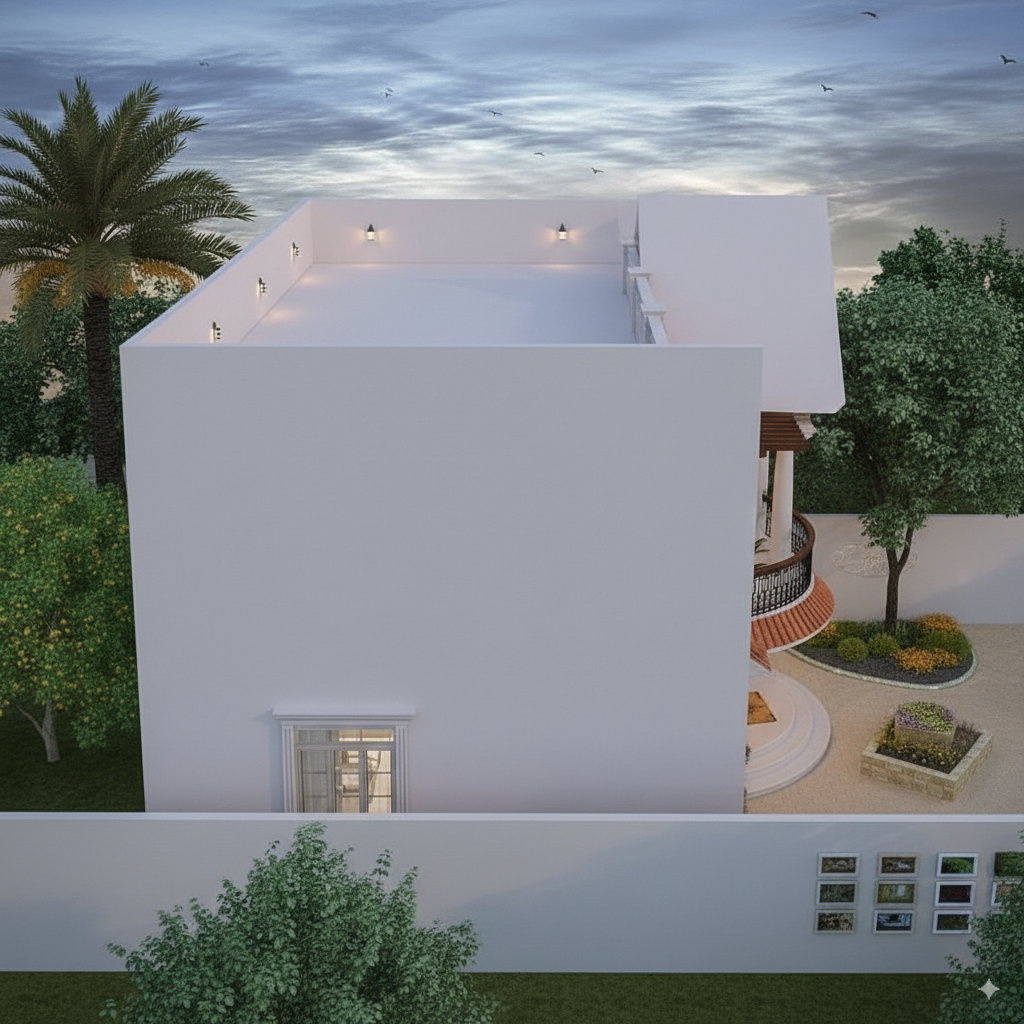
- Privacy wall that doesn’t feel defensive. Smooth top, integrated lights, and green edges. Swap: plant a hedge layer or climbers to soften existing walls.
- Courtyard centerpiece. A small raised planter gives the arrival moment a focus. Swap: round gravel pad with one statement pot.
Translate the Style
Townhouse: Keep the curved gesture with a half-round step and an arched metal canopy. Use a single potted cypress for vertical emphasis and a slim iron balustrade painted black.
Villa: Repeat the balcony radius on a small terrace or porch rail; break up long walls with a pergola bay; add three warm wall lanterns equally spaced to “count the rhythm.”
Apartment: You can still capture the look: a curved doormat, an arched mirror, black iron house numbers, and terracotta planters clustered in two sizes.
Colors, Materials & Finishes That Do the Heavy Lifting
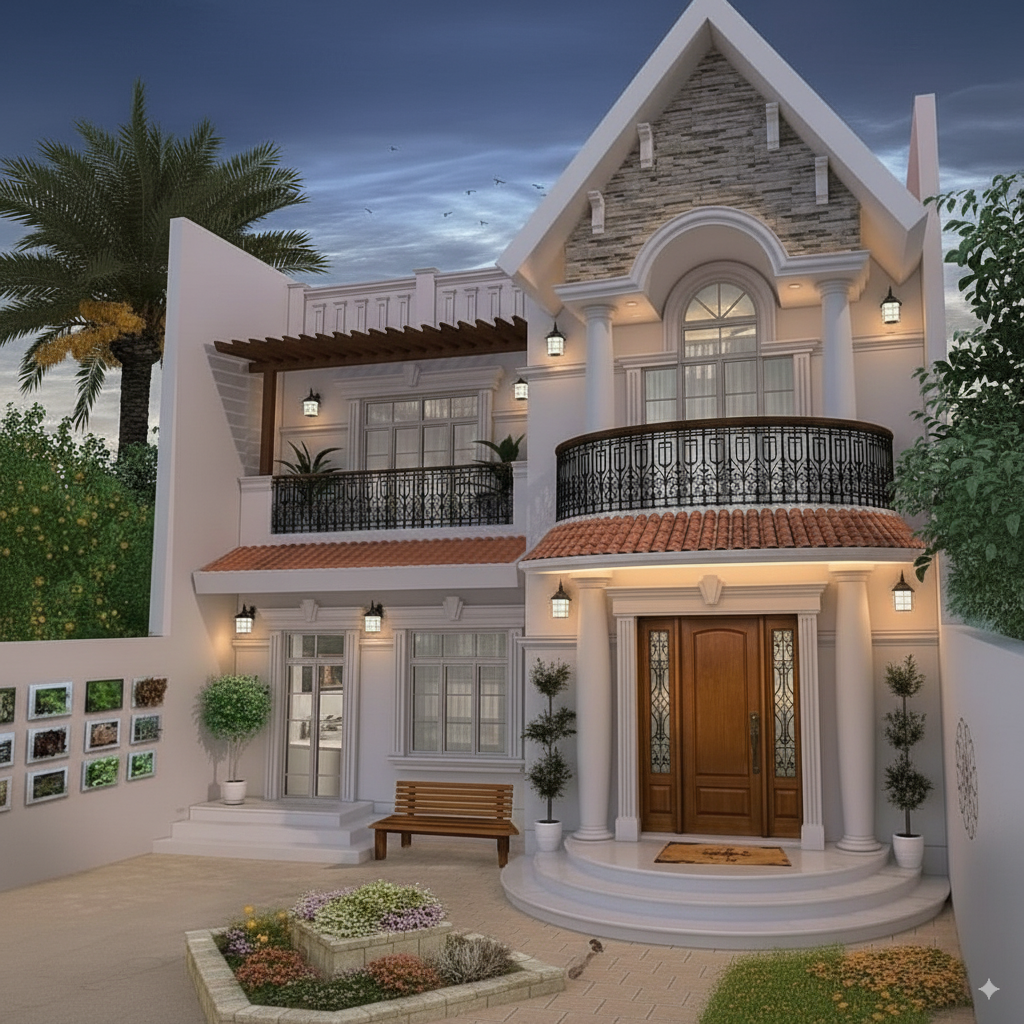
Walls: warm off-white (think natural cotton rather than paper white). Roof: terracotta tile or metal in a clay tone; specify anti-glare matte. Ironwork: black powder-coat with a subtle satin sheen; choose patterns with generous negative space. Door: natural wood in a satin finish; oversized hardware (30–40cm pull) acts like a necklace. Stone accent: gable in mixed ashlar or ledgestone; keep grout color close to stone for a calm read. Lighting: 2700–3000K wall lanterns; add step grazers and micro-uplights for olive trees.
Palette that always photographs well: Off-white walls, black iron, clay roof, warm wood door, deep green plants. Five notes—no more—and your photos will look editorial without filters.
Lighting Plan for the Evening Glow
Light is the invisible architect. For this villa, it’s arranged in layers: wash the walls softly, graze the columns and steps to show depth, and pin-spot key features like the tree by the door or the planter in the courtyard. Keep temperatures consistent so nothing looks blue. A simple rule: warm & concealed beats bright & exposed.
Landscaping & the Arrival Story
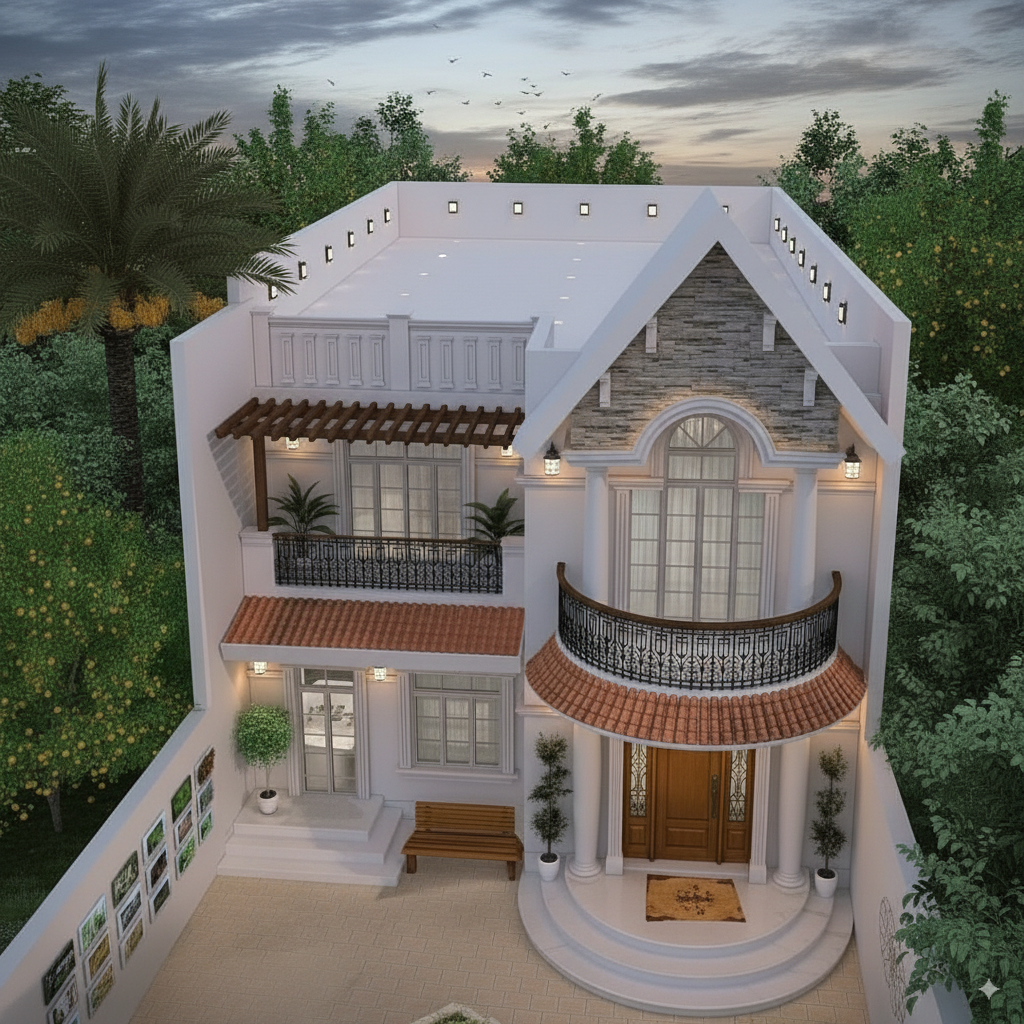
Landscaping is the frame that makes the picture feel complete. Choose two plant shapes—column (cypress or bay laurel) and sphere (myrtle or box)—and repeat. Limit flower colors to one soft tone so the roof and door remain the heroes. Define the path edge with a contrasting paver band; this gentle “runway” leads the eye and feet to the door.
Common Mistakes to Avoid
- Harsh white walls. They glare in sun and fight your warm lighting. Choose warm off-white.
- Over-decorating the balcony. Let the curve be the star; keep the iron pattern light.
- Cold light temperatures. 4000K makes stone and skin look chalky. Stay at 2700–3000K.
- Too many plant species. Two shapes, repeated, look curated and upscale.
- Underscaled hardware. Small door handles disappear; go bigger than you think.
Weekend Upgrade Checklist
- Repaint the door a warm wood tone or deep color, add an overscale handle.
- Install two matching planters; choose a columnar evergreen for height.
- Swap bulbs to 2700–3000K and add two step lights or path grazers.
- Add a round doormat or half-moon paver landing to hint at a curve.
- Edge the path with a contrasting band; sweep and power-wash for a fresh read.
- Mount a simple trellis or pergola bracket to create shadow rhythm.
FAQs
Is a curved balcony practical?
Yes—radius rails shed water better than flat corners and feel safer. Use powder-coated aluminum or galvanized steel for coastal zones.
Can I get the terracotta look without re-roofing?
Try a clay-tone metal awning over the door or a terracotta ridge cap. Even small roof accents can shift the whole palette.
What’s the single best first upgrade?
A dramatic door with warm lighting. It changes evening photos and the feeling every time you come home.
How do I avoid looking “too busy”?
Limit yourself to two neutrals (off-white + black), one natural (wood), and one accent (terracotta). Then stop.