

Stained-Glass Dining Room Ceiling: Complete Design, Cost & Lighting Guide (With Video)
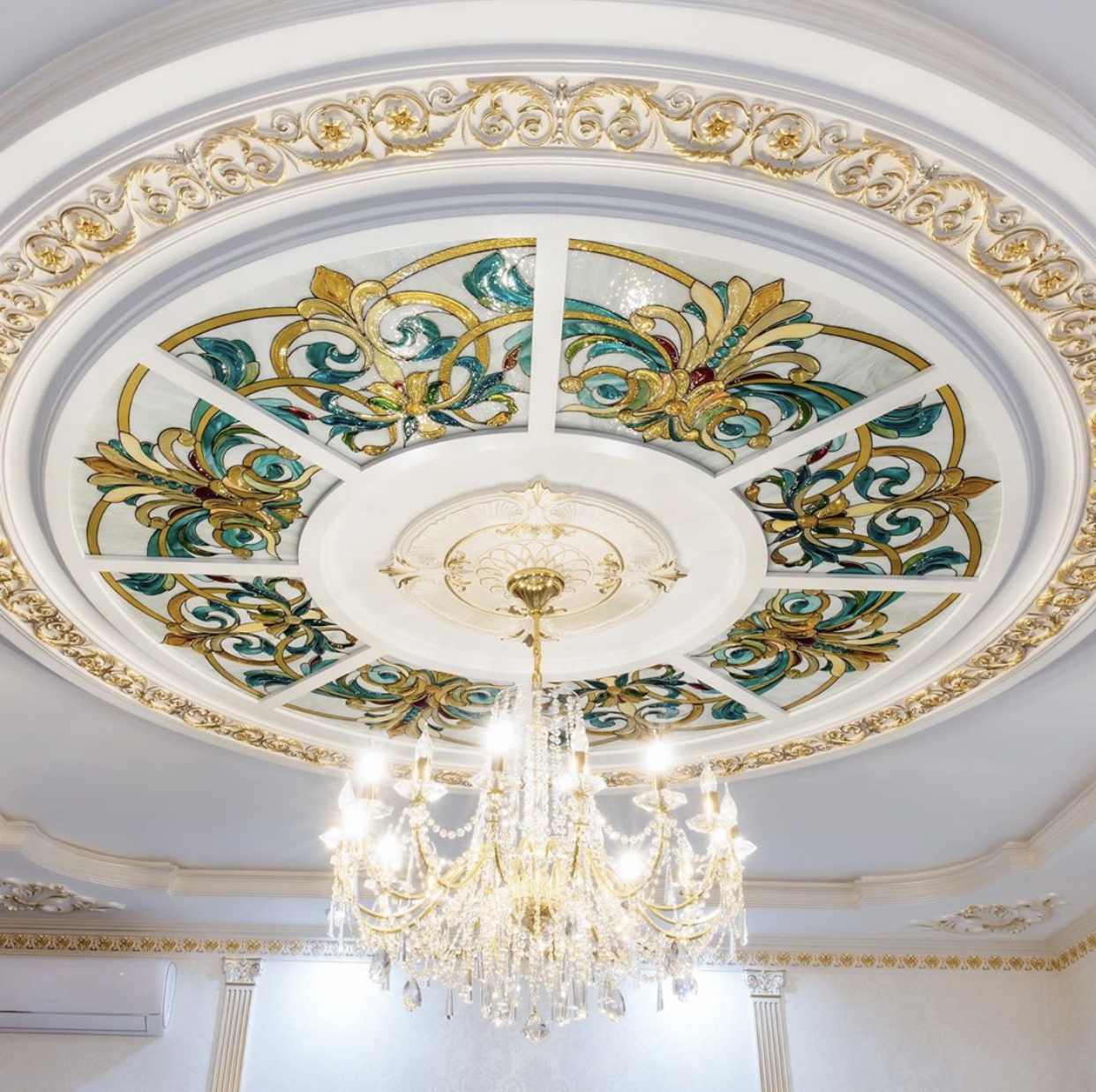
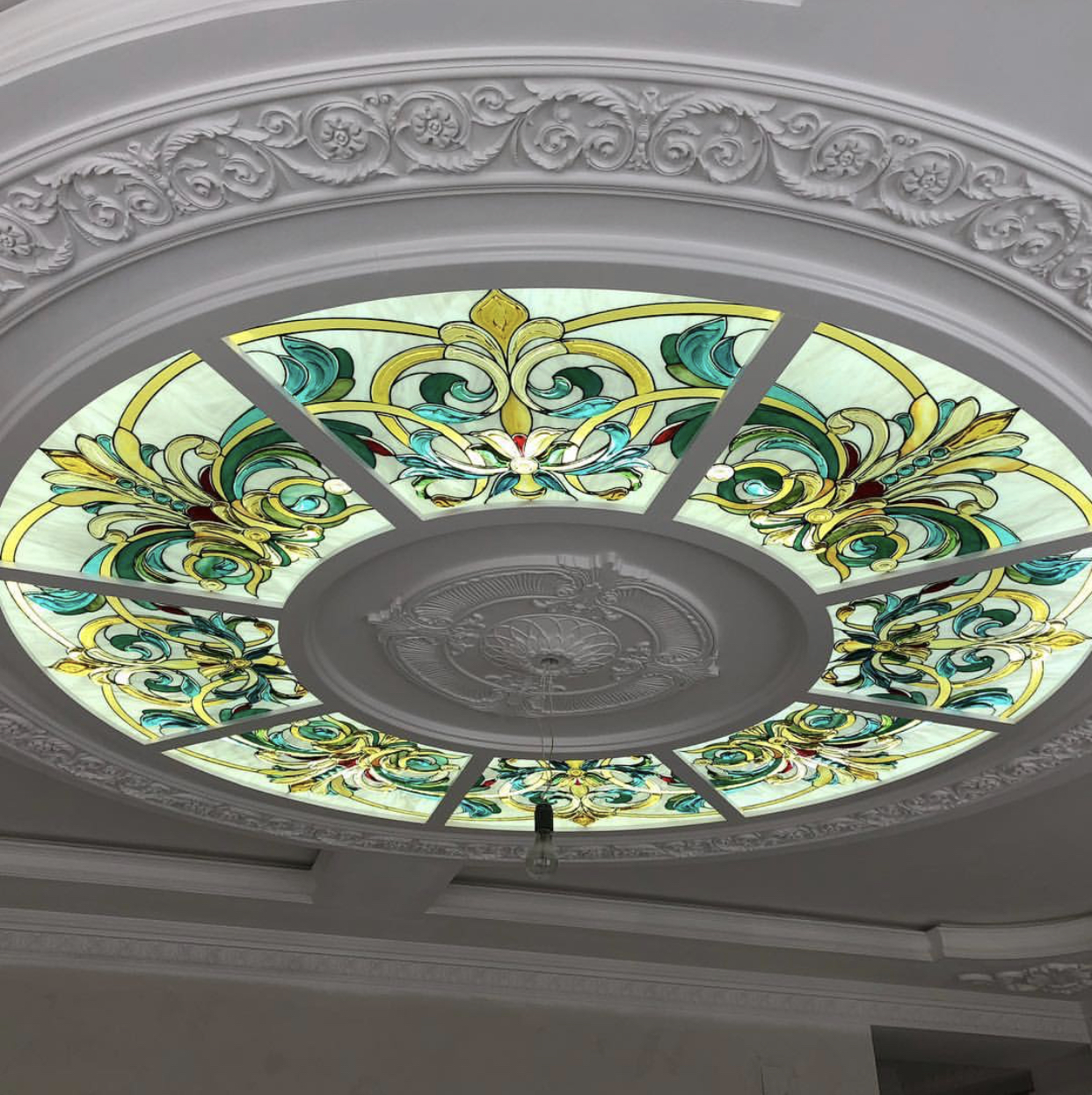
When people talk about “statement ceilings,” this is the reference image. The round stained-glass laylight above blends Art-Nouveau curves, opal and jewel tones, and LED backlighting so the space glows day and night. This article breaks the project down like a designer would—materials, lighting temperatures, framing, installation, and budget—so you can brief a contractor or simply understand what you’re seeing.
- A ceiling laylight is a backlit glass feature that sits within the ceiling—different from a skylight (which opens to the sky).
- LED strips at 2700–3000K with >90 CRI make stained glass feel warm and natural around dining skin tones and food.
- Expect a layered build: structural frame → service cavity for lighting/maintenance → stained-glass panels set in a metal or timber grid.
- Costs vary widely by size and craftsmanship; plan $350–$800+ per sq ft for artisan glass plus framing, lighting, access, and installation.
- Maintenance is low if you plan a removable center medallion or access hatch for cleaning and LED replacement.
What Exactly Are You Looking At?
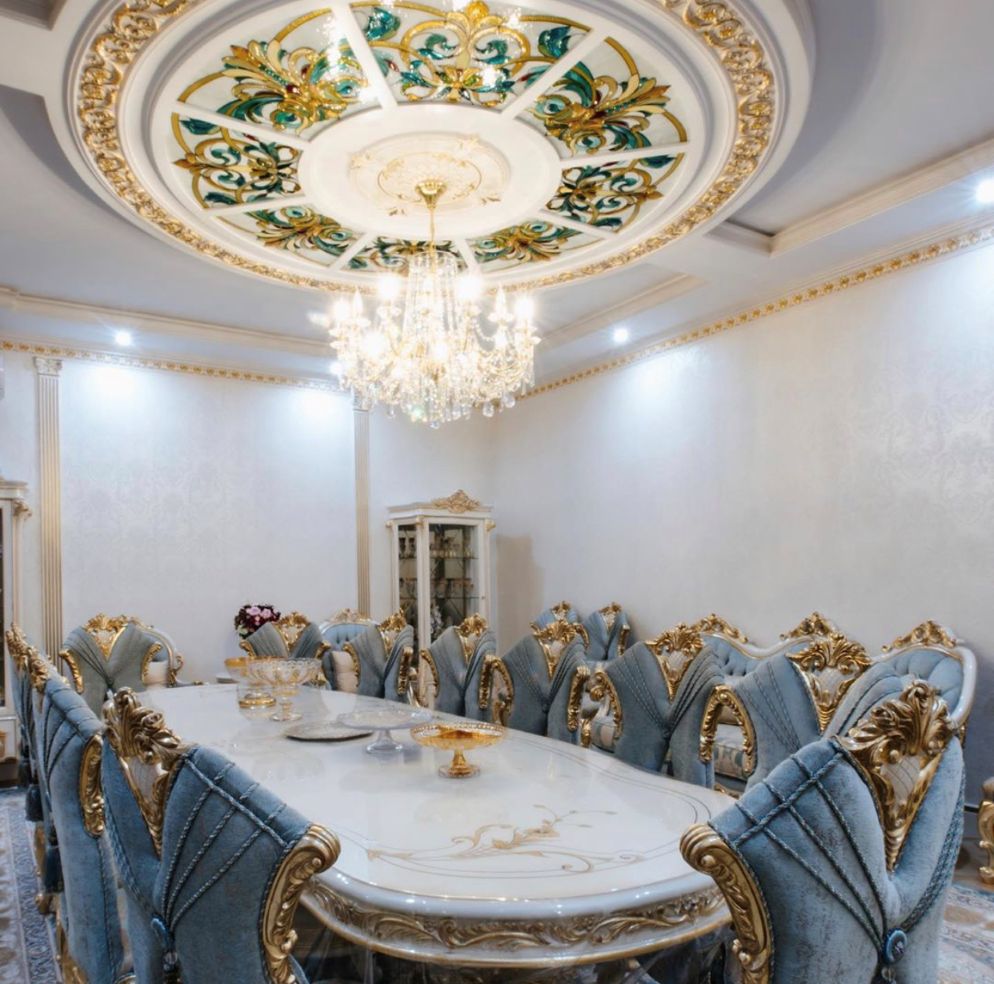
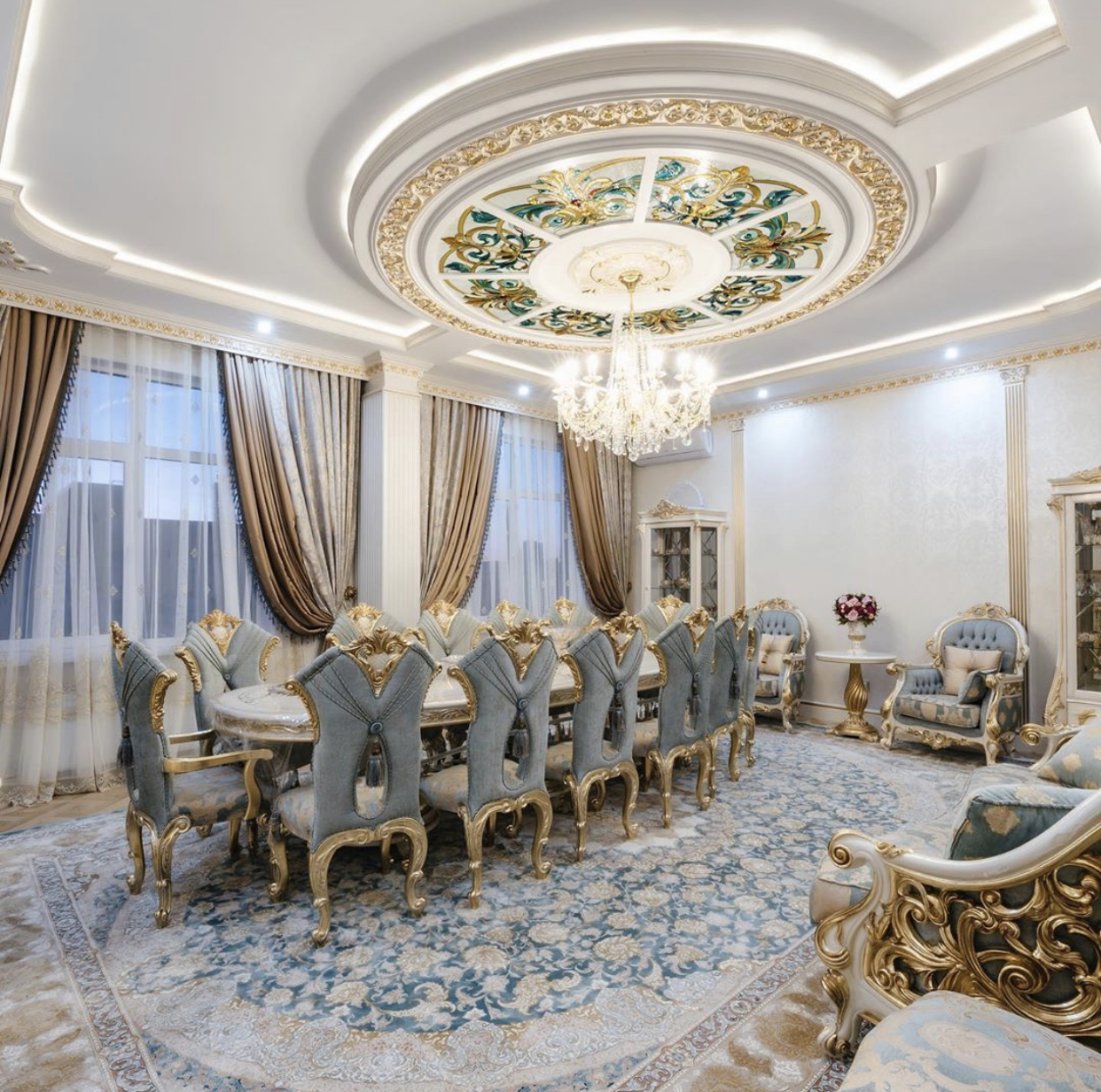
The centerpiece in these photos is a circular stained-glass laylight—a backlit glass ceiling feature set into a decorative plaster ring. Unlike a skylight, it doesn’t require an opening to the sky; the glow comes from LED fixtures hidden above a service cavity. Designers use laylights when they want the drama of daylight without weather or orientation constraints. Here, the laylight sits directly above the dining table, framing the chandelier like a halo and pushing light evenly to the room’s edges.
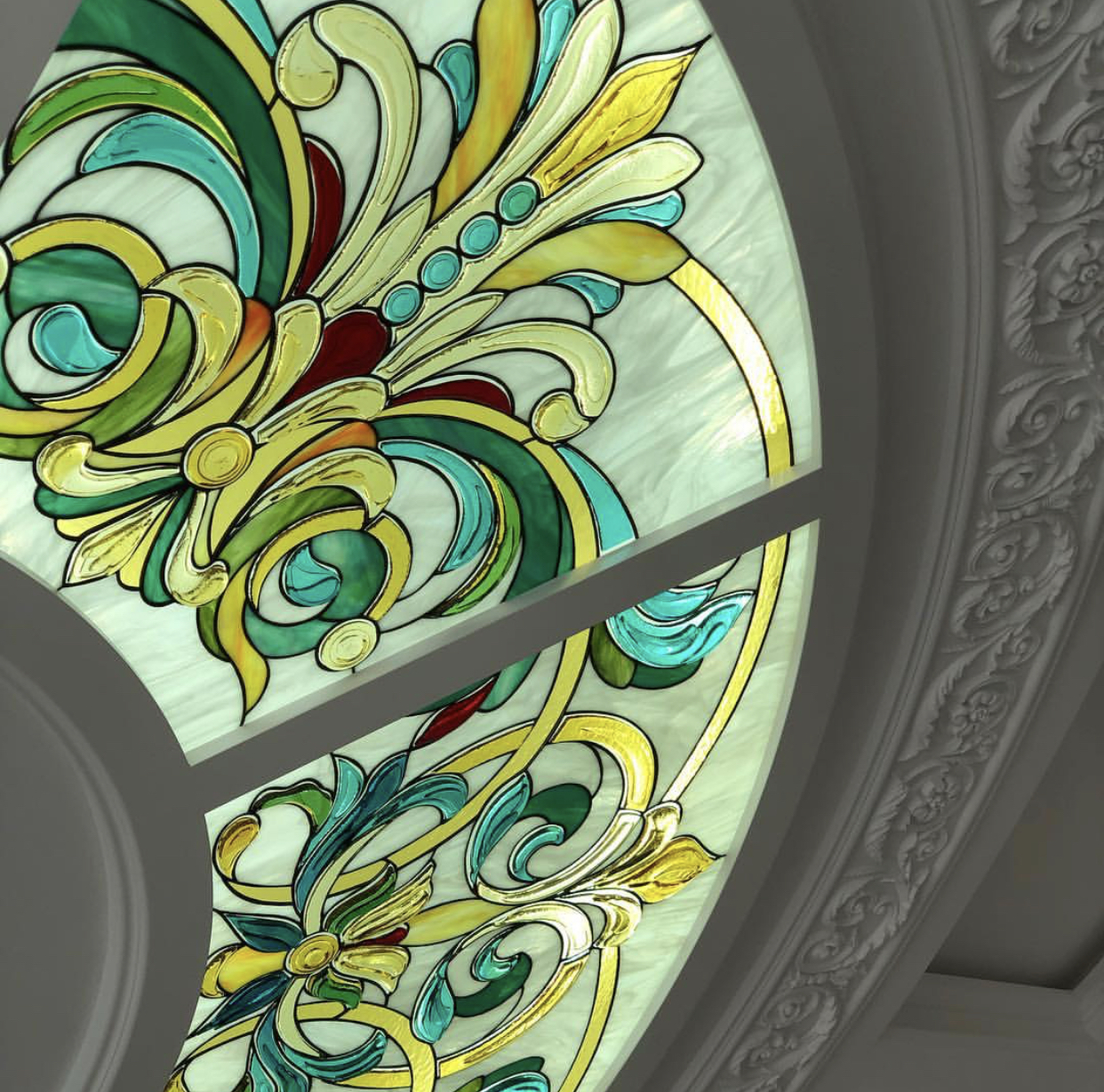
The laylight is divided into pie-shaped segments with a removable central medallion. Each segment carries an Art-Nouveau scroll of amber, leaf-green, teal, and a blush of wine red—tones that flatter food and skin. The outer ring is a crisp plaster molding: egg-and-dart, beading, and rosettes—the classic “necklace” that makes the ceiling read couture rather than commercial.
Design Language: Motifs, Colors & Metalwork
Stained glass speaks through three things: motif, color, and caming (the metal that joins pieces). The motif here is floral-scroll—an Art-Nouveau vocabulary of curling leaves and buds. Colors work in “jewel + milk” pairs: bright emerald/teal playing against milky white opal, with amber leaf and tiny wine accents to keep the palette adult. Caming appears warm, like brass, which reads luxurious against cool greens.
Why this palette performs so well in a dining room: human skin tends to look its best next to warm whites and greens; they neutralize redness, make gold tableware glow, and keep blue seats or drapery from turning cold. When the chandelier’s 2700K lamps spark, the metals in the glass throw micro highlights that feel festive without crossing into nightclub territory.
Lighting Plan: Color Temperature, CRI & Dimming
A backlit ceiling lives or dies by its lighting plan. You’ll see three layers working together:
- Panel backlighting using LED strips in aluminum channels. For dining, 2700–3000K feels candle-glow warm. Choose CRI 90–95 so greens stay green and food looks delicious.
- Chandelier sparkle with dimmable lamps. This creates specular highlights and gives the room “occasion” energy.
- Perimeter grazing (optional) from cove lights or small spots. This kisses the plaster moldings so the ceiling reads layered.
Put the laylight and chandelier on separate dimming zones. Early evening, keep the laylight at 70% and the chandelier around 30% for romance. For cleanup or games night, flip the ratio. If you want a “sky” effect, program a very gentle 2600→3000K sunset fade across 30–45 minutes.
Structure: Frames, Safety Glass & Access
Behind the beauty sits a practical build:
- Sub-frame: timber or steel ring fixed to joists or a suspended grid.
- Service cavity: 80–150 mm for LED channels, drivers, and ventilation so heat can escape.
- Glazing: stained glass laminated to clear tempered glass (or sandwiched between laminates) for safety and stiffness.
- Access: a removable center medallion or drop-in segment allows cleaning and future LED replacement.
If the home is humid or coastal, specify sealed drivers and consider a desiccant vent to protect metal finishes in the caming.
How It’s Built: Step-By-Step
- Brief & survey: confirm table size, chandelier drop, and ceiling height. Photograph existing trims and pick a diameter that frames—not overwhelms—the room. A good rule: the lit circle should be roughly the table length.
- Design sketch: the artist drafts a radial motif. You sign off colorways and caming metal (brass, copper, lead with patina).
- Template & pattern: full-size paper pattern maps every piece. The glass artist hand-selects sheets for grain and opalescence.
- Cutting & caming: each piece is scored, ground, wrapped in copper foil or set into lead came, and soldered.
- Framing & lamination: for ceilings, most studios laminate stained glass to safety glass. Edges are polished.
- Lighting layout: LED channels get spaced for uniformity; drivers are placed where they can be reached without dismantling the room.
- Installation: panels sit in a metal/timber grid with gasket tape to avoid rattles. The center medallion drops in last to cover screws.
- Commissioning: dimming curves and scenes are programmed: dinner, cleanup, late-night, photograph mode.
Budget & Cost Ranges (Reality Check)
Every studio prices differently, but here’s how to think about numbers (USD rough ranges):
- Artisan stained-glass panels: $350–$800+ per sq ft depending on motif density, caming metal, and lamination.
- Framing & plaster ring: $45–$120 per linear ft including substrate, trims, and finishing.
- LED system: $25–$60 per linear ft of channel; drivers and controls add $400–$1,500 depending on zones/protocol.
- Chandelier coordination: allow a day of installation time plus dimmable lamps (budget separately for fixture).
- Access/maintenance design: small upcharge worth every penny—saves ceiling surgery later.
For a 2.2–2.6 m diameter circle, total project budgets often land in the mid-five to low-six figures depending on craft and trim.
Style Variations & Where They Fit
Not every space wants floral scrolls. Popular alternatives:
- Geometric & Islamic-inspired patterns for villas with arches and mashrabiya—repeatable, serene, beautifully timeless.
- Art Deco sunbursts and stepped rays if your furniture skews 1920s glam or contemporary classic.
- Minimal modern with milk glass and faint veining for a “cloud dome” vibe in clean, white rooms.
- Botanical vines in muted greens for garden rooms; pair with rattan and limewashed oak.
How to Decorate Under a Stained-Glass Ceiling
The ceiling is your star; the room should play rhythm section. A few principles:
- One hero, two supporters. Hero = ceiling. Supporters = chandelier + rug or drapery. Everything else stays quieter.
- Echo, don’t copy. If the glass has emerald, let the chairs stay cool blue-gray; pick up emerald only in a small trim or vase.
- Metal harmony. Warm caming wants warm metal—brass or gold leaf. Avoid mixing too many metal tones at eye level.
- Chandelier height. Bottom of the chandelier at 76–86 cm above the table keeps the composition tight and photogenic.
- Rug sizing. Allow chairs to pull out fully while remaining on the rug—usually table footprint + 60–70 cm each side.
Care, Cleaning & Longevity
The good news: stained-glass ceilings barely ask for attention if you plan for access. Dust the chandelier weekly (compressed air on low helps) and schedule a quarterly wipe of the glass with a damp microfiber—no ammonia, no abrasives. If laminated, the glass face is robust; if exposed caming is present, avoid acidic cleaners. LED strips run cool and can last 50,000+ hours, but drivers are the wear item—keep them accessible and ventilated.
Common Mistakes to Avoid
- Too cool lighting. 4000K makes skin and food look gray; stay warm (2700–3000K).
- No access plan. If you can’t reach drivers or panel backs, minor maintenance becomes a major project.
- Over-busy furniture. Curvy ceiling + curvy chairs + pattern-heavy rug = visual noise. Edit.
- Ignoring HVAC. Keep supply/return paths clear so the laylight cavity doesn’t trap heat.
- Wrong scale. If the lit circle is smaller than the table, it feels mean; if far larger, it dwarfs guests.
FAQs
Is stained glass heavy for a ceiling?
Laminated stained glass is heavier than acrylic but manageable with a proper sub-frame. Your contractor will spread loads to joists and use safety laminates.
Can I retrofit this into an existing dining room?
Yes. Most projects use a suspended ring below the existing slab/joists, hiding LEDs and drivers. Expect minor plaster and paint works.
Will the colors distort the room?
Not if you keep CRI high and CCT warm. The glass adds a gentle tint; food and faces still look natural under a 2700–3000K plan.
Is acrylic a good alternative?
Acrylic diffusers are lighter and cheaper, but they lack the depth and sparkle of true glass. For premium rooms, real glass wins.
How long does a project take?
Typical timelines run 6–12 weeks from design approval: 2–4 weeks for craft + 1–2 weeks for framing/lighting + finishing/commissioning.
Media Gallery